
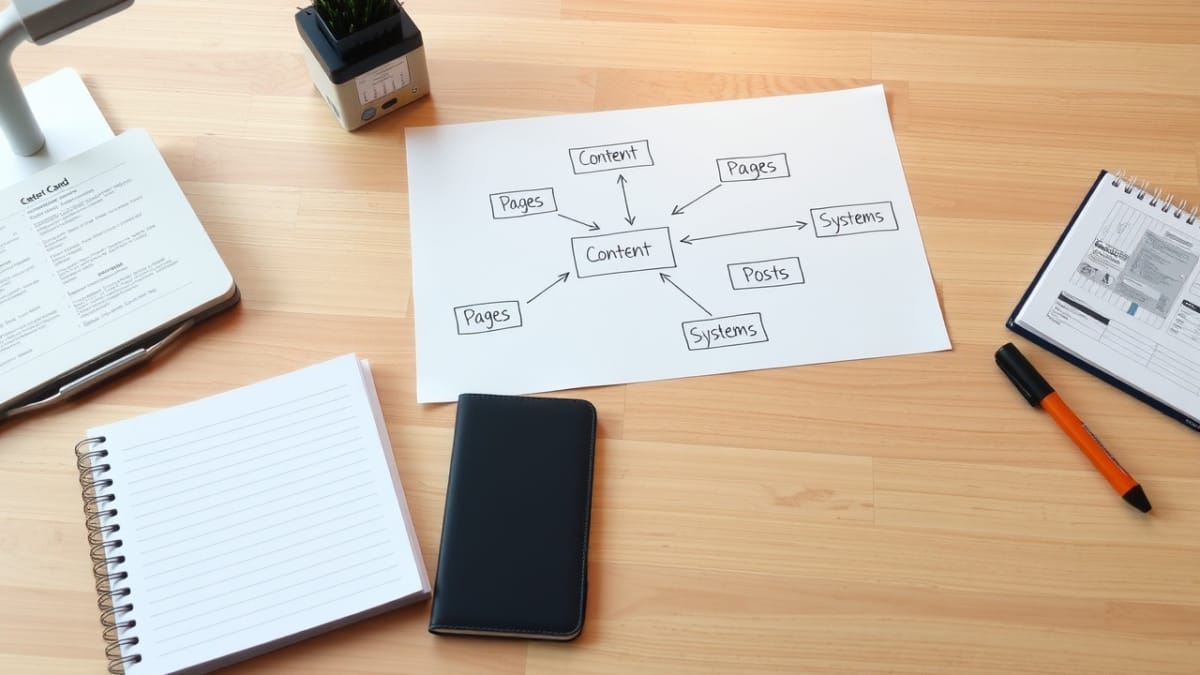
This checklist defines the content system and page model used across the site. Its purpose is to clearly separate page roles, post usage, and structural responsibilities before any content is created.
Decisions made here determine how content is organized, linked, maintained, and scaled over time.
Checklist Objective
Establish a clear, documented model for how pages and posts are used, including what each is responsible for and what it is not.
Preconditions
- Planning 01 — Site Purpose & Scope Definition is completed and approved
Checklist Steps
Define the purpose of Pages
- Identify which pages are authoritative and long‑lived
- Confirm pages are not used for frequent updates
Define the purpose of Posts
- Identify posts as checklist‑driven or procedural content
- Confirm posts support pages rather than replace them
Identify landing pages
- List top‑level entry pages that represent systems
- Confirm each landing page has a single, clear responsibility
Define post usage rules
- Confirm posts are atomic and executable
- Confirm posts are written as checklists or runbooks
Confirm excluded content types
- No duplicate page/post roles
- No hybrid content types without explicit definition
Review alignment with navigation planning
- Read titles only
- Confirm content model supports navigation structure
Publishing Governance
Once page and post roles are defined, publishing behavior must remain consistent to prevent drift, duplication, and SEO ambiguity.
- Publishing Checklist — Page Package (Page Pkg) — Defines the required publishing package for pages, including H1 handling, metadata limits, featured image requirements, and governance rules.
Completion & Next Phase
Completion of this checklist confirms that page and post responsibilities are clearly defined and ready to support navigation and publishing workflows.
Proceed to: Planning 03 — Navigation & Landing Page Map